

Agentic Harness Engineering: Taming Autonomous AI in Production
If you have ever built a prototype where an AI agent (like an LLM runner) is given direct access to your database, local terminal, or internal APIs, it feels like magic. The AI can read data, write its own code, call tools, and solve problems on the fly. Taking that raw setup and putting it directly into a live, production network is like letting an unvetted intern run wild with root access — and it is the reason Agentic Harness designs now show up on nearly every serious agentic platform roadmap.
In production, AI models are non-deterministic: identical input does not guarantee identical output. Agents can get stuck in unproductive reasoning loops, fall victim to prompt injection (adversarial input crafted to redirect the agent's behavior), or hallucinate bad data that breaks downstream software. To build a platform that scales safely, enterprise architects have to go beyond a simple agentic framework wrapped around an LLM call. You must separate the agent's internal reasoning loop from the system's infrastructure loop. That separation is what we mean by Agentic Harness Engineering.
This is not a hypothetical concern. The moment an agent is given a code-execution tool, a database credential, or a write path into any internal system, the question stops being "does this demo work" and becomes "what happens on the 1-in-500 run where the model does something you didn't anticipate." A harness is the answer to that second question — and it is the part most prototypes skip entirely.
The Strategic Shift: Micro-Orchestration vs. Macro-Choreography
Engineers debating how to manage AI agents often get trapped in a false choice between total central control (orchestration) and complete agent freedom (choreography). A more durable resolution is a dual-loop architecture:
- The Inner Loop (Micro-Orchestration): The agent's internal reasoning process — step-by-step planning and tool selection, typically implemented with a framework like LangChain or AutoGen.
- The Outer Loop (Macro-Choreography): The enterprise infrastructure that lets agents, databases, and microservices communicate asynchronously across the broader network, often over a message fabric like Apache Kafka. For a comparison of how agents hand work to each other versus to tools, see our breakdown of A2A vs. MCP.
The Agentic Harness sits at the boundary between these two loops. It is not a library you pip install or an npm package you import into the agent's process — it is infrastructure deployed alongside the agent: typically a sidecar or gateway layer that mediates every request the agent's inner loop tries to send outward.
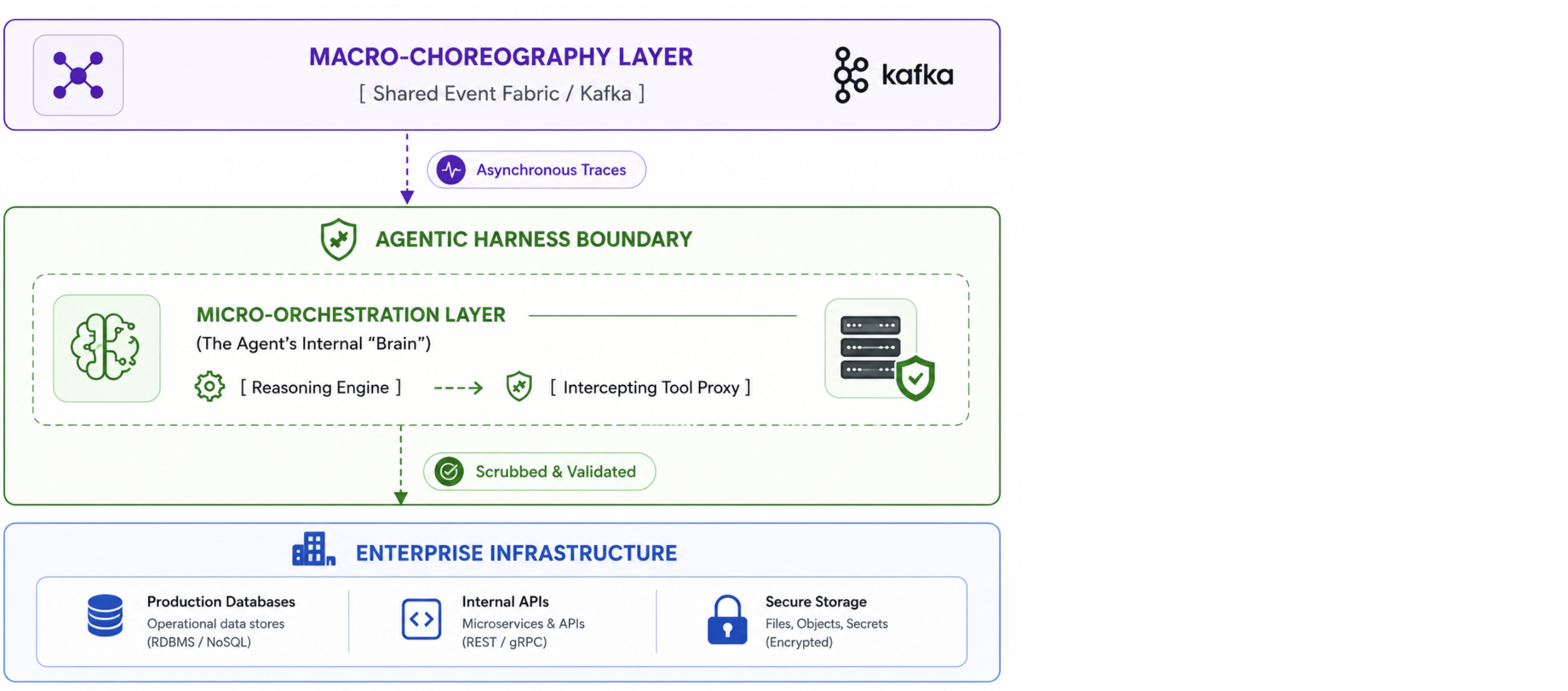 Figure 1: Dual-Loop Architecture for Agentic Harness
Instead of letting the agent's inner loop execute commands directly against your network, the harness intercepts, validates, and logs every outbound query, API call, or system mutation — a Zero-Trust posture applied specifically to non-deterministic clients. Concretely: the agent's process never holds a database password, a cloud IAM role, or a raw internal hostname. It holds a handle the harness understands, and only the harness holds the real credential.
The Four Pillars of a Production-Grade Agentic Harness
Each pillar addresses a distinct failure mode an agent can trigger — arbitrary code execution, unsafe tool calls, runaway reasoning loops, and unbounded context growth. They are separable: a team can adopt one pillar before the others, and most do.
1. Locked-Down, Ephemeral Virtualization
If an agent is allowed to write and run custom code — generating a Python script to analyze financial data, for instance — that code must never execute on a host server or inside a standard shared container. The harness instead provisions an isolated environment per execution trace: either a microVM (e.g., AWS Firecracker, which boots in roughly 125 ms) or, where cold-start latency is the binding constraint, a WebAssembly (Wasm) sandbox (sub-millisecond instantiation).
| microVM (e.g., Firecracker) | Wasm sandbox | |
|---|---|---|
| Isolation boundary | Full kernel/hardware-virtualized boundary | Language-runtime sandbox, narrower syscall surface |
| Cold-start latency | ~125 ms | Sub-millisecond |
| Best fit | Arbitrary native code, untrusted libraries | Short, well-scoped compute tasks |
| Maturity for native code | High | Still maturing |
The trade-off is real, not cosmetic: microVMs give you a full kernel boundary and stronger isolation guarantees; Wasm gives you a narrower syscall surface and near-instant startup, at the cost of a less mature isolation model for arbitrary native code. Each environment is torn down after the trace completes, so nothing from that execution persists between tasks. The harness also monitors the sandbox at the host kernel level using eBPF, and if the generated code attempts an unauthorized action — opening an unexpected socket, reading a restricted path — the runtime is terminated before the action completes.
2. The Intercepting Tool Proxy
When an agent wants to use a tool, it emits a JSON payload specifying an endpoint and arguments. Letting an agent talk directly to internal microservices means trusting a non-deterministic client with real credentials. Instead, tools are mapped through a proxy inside the harness: the agent only ever sees virtualized pointers, never actual API keys, connection strings, or internal URLs.
The proxy layer typically does three things, in order:
- Schema validation — rejects any call whose shape doesn't match a pre-registered, allow-listed tool definition.
- Credential substitution — swaps the agent's virtual pointer for a real, least-privilege credential scoped to that one call.
- Audit logging — records the call, its arguments, and the identity of the trace that issued it, before it ever reaches the real service.
This is worth stating precisely, because it is easy to overclaim: schema validation and least-privilege proxying narrow the blast radius of a compromised or manipulated agent — they do not eliminate injection. A malicious instruction that stays within the schema's grammar (a valid-looking tool call requesting an out-of-scope but technically permitted action) still requires a downstream authorization check. Treat the proxy as a chokepoint that shrinks the attack surface, not a filter that certifies every call as safe.
3. Non-Deterministic Loop Protection & Token Throttling
Traditional rate limiters cap how many API calls a user makes per minute. Agents break that model: a single prompt can send an agent into a confused reasoning loop that calls an internal API dozens of times in seconds, running up token bills and load on downstream services. The harness instead runs a stateful, sliding-window throttler scoped to a single execution trace via a Trace ID, tracking cumulative input/output tokens and cost against that one transaction rather than a per-minute user quota.
Signals worth tripping a circuit breaker on include:
- The same tool call failing and retrying with identical (or near-identical) corrupted arguments — a "ping-pong loop."
- Cumulative token spend on a single trace crossing a hard budget ceiling before the task resolves.
- Call volume on one trace exceeding what any legitimate task of that type should need.
When any of these trip, the harness halts the trace, caches its state, and routes the context to a human for review rather than letting it fail silently or run indefinitely.
4. Out-of-Band State & Context Management
As an agent cycles through long reasoning chains, its active context grows. Moving that context back and forth across network nodes adds latency and inflates LLM compute cost. The harness decouples state from the agent's application process, shifting it to an external cache (a Redis cluster is a common choice) — see our notes on context caching strategies for the mechanics. Before the next step, the harness compresses and summarizes historical context out-of-band, so the agent receives a smaller, state-verified input rather than the full accumulated history. This keeps latency and token spend bounded, at the cost of summarization fidelity — compression is lossy, and a badly-tuned summarizer can drop context the agent actually needed three steps later.
Where the Harness Costs You
None of this is free, and a harness that ignores its own overhead is not a production design, just a diagram.
Per-trace virtualization has a floor. Spinning up a microVM or Wasm sandbox for every execution trace adds provisioning latency and compute cost that stack up fast under high query volume. For low-privilege, read-only agents that never execute arbitrary code, a shared sandbox with syscall filtering is usually the right call — reserve the full microVM-per-trace pattern for agents that write or execute code, or touch privileged state.
Schema validation trades one error for another. Tighten the allow-list and you get more false positives — legitimate calls the model phrases in a way the schema didn't anticipate, which shows up as user-facing failures and support tickets. Loosen it and you get more false negatives — a crafted call that is syntactically valid within the schema but semantically wrong. There is no setting that eliminates both; tuning this trade-off against real traffic is ongoing work, not a one-time configuration.
The circuit breaker is a ceiling, not a safety net. Every trace routed to a human reviewer after a loop-detection trip consumes a person's attention. At meaningful scale, the reviewer queue itself becomes the bottleneck — track it as an operational metric, not an afterthought.
Context compression can quietly degrade task quality. A summarizer tuned for average-case context can drop the one detail a specific task actually needed later in the chain. Treat compression fidelity as something to measure, not assume.
Sometimes the harness is over-engineering. A single-tenant internal tool with a narrow, pre-approved tool set and no code execution may not need the full dual-loop pattern at all. Match the isolation level to what the agent is actually privileged to do.
Common Objections, Answered
"Isn't this just an API gateway or service mesh?" Partially, but a standard gateway wasn't designed for a client that generates its own requests non-deterministically. A harness adds agent-specific controls a generic gateway doesn't: per-trace token accounting, ping-pong loop detection, and ephemeral code-execution sandboxes — none of which a request-routing layer handles on its own.
"Won't this add unacceptable latency?" It adds measurable latency — schema validation and the proxy hop typically cost tens of milliseconds per call, and sandbox spin-up costs more depending on which environment you choose. The right comparison isn't "harness vs. no overhead," it's "harness overhead vs. the cost of an unbounded loop or a leaked credential."
"Can't we just fix this with better prompting?" Prompting reduces the frequency of bad behavior; it does not bound the worst case. A harness is a control on outcomes, not on model behavior, which is why it holds even when a prompt-injection attempt succeeds at the model layer.
"Doesn't this slow down agent development?" It adds friction to the first integration — every tool needs a schema before it can be called through the proxy. In exchange, you get an audit trail and a blast-radius limit for free on every tool added afterward, which is a better trade than debugging a production incident with no record of what the agent actually sent.
"Do we need all four pillars from day one?" No — see the rollout path below. Most teams under-invest in the proxy and throttling layers and over-invest in virtualization before they've needed it, largely because sandboxing is the most visually impressive part of the architecture to demo.
A Phased Rollout Path
Most teams don't build all four pillars at once. A workable sequence:
- Start with the tool proxy. It's the highest-leverage, lowest-latency-cost control, and it gives you audit logs before you've built anything else.
- Add token and loop throttling next. This is what stops a runaway agent from becoming a budget incident before you've hardened code execution.
- Introduce ephemeral virtualization only once an agent needs to execute arbitrary code. Read-only, tool-calling-only agents can often run safely behind pillars 2 and 3 alone.
- Move state out-of-band last, once you understand your actual context-growth patterns well enough to tune compression without losing task-relevant detail.
Each phase should ship with its own success criteria before you move to the next one — for the proxy, that's audit-log coverage of every tool call; for throttling, it's a measurable drop in runaway-trace incidents; for virtualization, it's zero unauthorized actions reaching the host during a defined observation window. Skipping the measurement step is how teams end up with four pillars and no evidence any of them are working.
Quick Reference: Harness Terms
- Trace ID — a unique identifier scoping token usage, cost, and throttling state to a single agent execution, distinct from a per-user or per-session identifier.
- Blast radius — the scope of systems or data a compromised or misdirected agent call could reach; the proxy's job is to shrink this, not eliminate it.
- Ping-pong loop — an agent repeatedly retrying the same failing tool call with the same corrupted arguments, the signature of an unresolvable reasoning error.
- Ephemeral sandbox — a microVM or Wasm environment provisioned for one execution trace and torn down immediately after, so no state persists between tasks.
- Out-of-band context management — moving conversation state and summarization work outside the agent's own request/response path to keep latency bounded.
- Interception ratio — the share of tool calls a harness blocks or rewrites, tracked as a baseline metric rather than a pass/fail signal.
Real-World Operational Metrics for Agentic Harness Observability
To monitor a harnessed agentic cluster, the observability stack needs infrastructure-centric metrics calibrated for non-deterministic workloads:
- Sandbox spin-up latency — how fast the harness provisions a clean environment. High latency here degrades end-user-facing response time directly.
- Harness interception ratio — the percentage of tool calls blocked or rewritten by the schema layer. Expect a non-zero baseline from normal validation; a sudden spike signals either a malfunctioning agent or an active injection attempt, and the two look similar until investigated.
- Token-to-task efficiency — task-completion value against token cost, to surface agents that are burning budget without converging on an answer.
- Circuit-breaker trip rate and reviewer queue depth — how often traces get routed to a human, and how long they wait there. A growing queue means your loop-detection thresholds or your reviewer staffing are out of sync with traffic.
- Context compression ratio — how much a trace's history shrinks before each model call, tracked alongside downstream task success so a latency win doesn't quietly become an accuracy loss.
Expect interception itself to cost something: schema validation and the proxy hop typically add tens of milliseconds per tool call, not zero. If your dashboards show zero added latency from the harness, the harness likely isn't actually checking anything.
Who Owns the Harness?
This is worth deciding explicitly rather than by default. If each application team builds its own proxy, throttling, and sandboxing logic, you get inconsistent schemas, duplicated credential-handling code, and no single place to see cross-agent token spend or interception rates.
The pattern that scales better treats the harness as shared platform infrastructure, owned by whichever team already owns your API gateway or service mesh:
- Platform/infra team owns the proxy, sandbox provisioning, and throttling policy as a shared service, with a versioned schema registry application teams submit tool definitions to.
- Application teams own the tool definitions themselves and the agent's reasoning logic, but consume harness enforcement rather than reimplementing it.
- Security sets the default allow-list posture and reviews schema changes for tools that touch sensitive systems, rather than auditing each agent integration independently after the fact.
- Engineering leadership sponsors the reviewer-queue staffing model, since circuit-breaker escalations are an ongoing operational cost, not a one-time build item.
Centralizing ownership is also what makes the metrics in the previous section meaningful — a single interception-ratio dashboard across every agent is far more useful than five teams each watching their own, inconsistent logs.
Conclusion
Placing an unstructured, autonomous agent directly onto production compute is an architectural anti-pattern, because agents are non-deterministic in a way legacy microservices are not. An Agentic Harness establishes a deterministic boundary around that non-determinism — but it is a boundary with real costs: added latency, tuning overhead, and a human review queue that has to be staffed. The agent stays free to reason and iterate inside its sandbox; the discipline is in sizing the harness to the privilege the agent actually needs, phasing in the pillars in the order that matches your actual risk, and monitoring what the harness itself costs you. For related patterns on watching agents in production, see our guide to monitoring agents with Langfuse.
None of this is permanent architecture, either. Treat the four pillars, the rollout order, and the ownership model above as a starting configuration to adapt to your own risk tolerance and traffic, not a fixed spec. As underlying models get more reliable at following tool schemas and less prone to injection, some of what the harness enforces today may shift further upstream, into the model layer itself. Until that shift is verifiable at your own risk tolerance, the safer default is to keep the boundary explicit, observable, and owned by a team accountable for it — rather than assuming the next model release makes the harness unnecessary.
Revisit the design each time you onboard a new class of agent or a materially different model, rather than assuming the original configuration still fits.